

A casual leave application is used when you need a short break from work for personal reasons or unexpected situations. It could be a family errand, a sudden appointment, or something that needs your attention during work hours.
Writing a clear and polite casual leave request helps your manager understand why you need the time off and allows them to plan work smoothly.
This article explains how to write a simple and well-structured casual leave application for office. You will also find useful formats and sample letters that make it easier to communicate your reason for leave in a professional and respectful way.
What is a Casual Leave Application?
A casual leave application is a short written request that employees submit when they need time off for personal reasons or sudden situations.
Casual leave is meant for unplanned or urgent needs, so the application usually explains the reason briefly and mentions the exact date of absence. It helps managers understand why you need leave and allows them to adjust work schedules without disruption.
A well-written casual leave application for office keeps communication clear and professional. It shows that you are taking responsibility for your tasks while requesting a break for genuine personal needs.
Most companies allow a limited number of casual leave days each year, so it is important to inform your manager as early as possible and follow the company’s leave policy.
Understanding the Significance of a Casual Leave Application for Office
Before we delve into the specifics of how to write a casual leave application, let’s explore why such an leave application is essential:
- Professionalism: Submitting a casual leave request reflects your adherence to workplace norms and respect for company policies.
- Clear Communication: A well-drafted application ensures transparency about your leave reason and duration, aiding efficient workload management.
- Workflow Management: Informing your employer in advance helps maintain workflow continuity and shows dedication to team success.
- Responsibility: Writing a casual leave application highlights your accountability and professionalism.
- Respect for Colleagues: It acknowledges your colleagues’ schedules, allowing them to adjust smoothly during your absence.
- HR Documentation: Casual leave applications serve as official records for attendance tracking and payroll processing.
- Policy Compliance: Following organisational guidelines for casual leave requests promotes harmony and policy adherence.
Casual Leave Application Format: How to Write a Casual Leave Application for Office?
When composing a casual leave application form for the office, it’s imperative to include the following key components:
- Header: Begin with the title, which includes your name, employee ID (if applicable), department, and the current date.
- Recipient Information: Next, provide the recipient’s name, the company’s name, and the company’s address.
- Salutation: Begin your letter with a formal greeting, such as “Dear [Recipient’s Name],”
- Reason for Leave: Clearly state the reason for your leave. Whether it’s personal, related to a medical condition, or due to urgent work, provide sufficient details to convey the circumstances.
- Duration: Specify the start and end dates of your leave, ensuring clarity regarding the period of your absence.
- Contact Information: Include your contact details, such as phone number and email address, to facilitate communication in case of any emergencies during your leave.
- Workplace Arrangements: If applicable, outline your plan for managing your workload during your absence. Mention if a colleague will cover for you or if you’ll delegate tasks.
- Maintain Professionalism: Maintaining a professional and formal tone throughout your casual leave application form. Avoid delving into personal details or emotions, focusing on factual explanations.
- Conciseness: Ensure your explanation remains concise and relevant to your leave request. Avoid including unnecessary information.
- Closing and Signature: Conclude your letter with a closing like “Yours sincerely” or “Yours faithfully,” followed by your full name and contact particulars.
Also Read:
| Types of Leaves Offered by Companies in India | How to Write Leave Extension Letter |
| Annual Leave Application Letter | Leave Application for Brother’s Marriage |
Format of a Casual Leave Application for Office
Format of a Casual Leave Application for Office
A simple and clear casual leave application format helps you request leave politely and professionally. The structure stays the same for most situations, whether it is a personal errand, a family need, or an urgent appointment. Your application should briefly explain the reason, mention the leave date, and reassure your manager that your tasks are handled.
Below are common scenarios where you may need to submit a casual leave application for office:
- Casual leave for personal reasons
- Casual leave for urgent work
- Casual leave for a family function
- Casual leave for a medical appointment
This basic format works for email and handwritten applications, making it easy to communicate your request to your reporting manager.
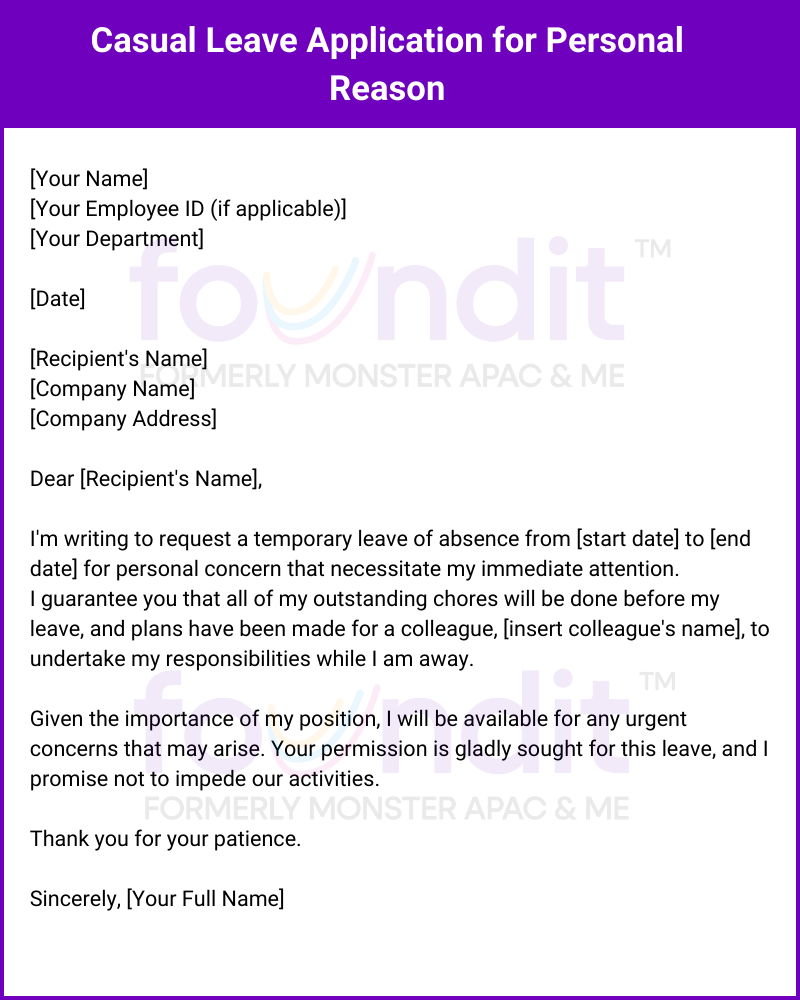
Sample 1: Casual Leave Application for Personal Reason
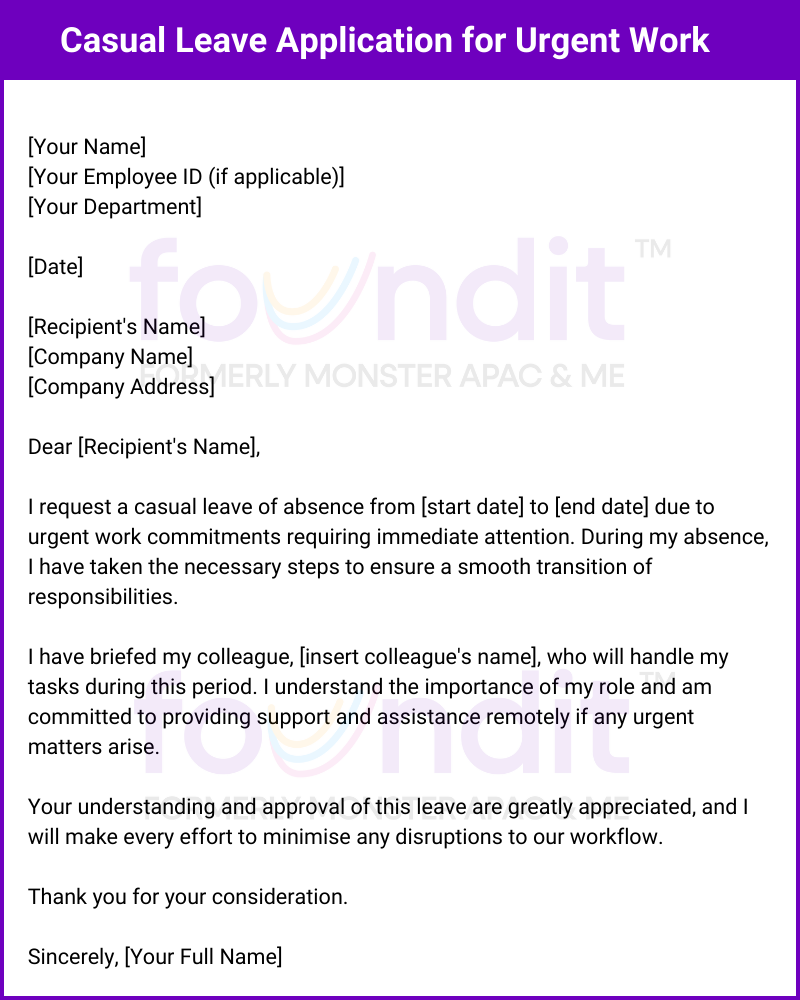
Sample 2: Casual Leave Application for Urgent Work
When writing a sample casual leave application for urgent work, follow this format.
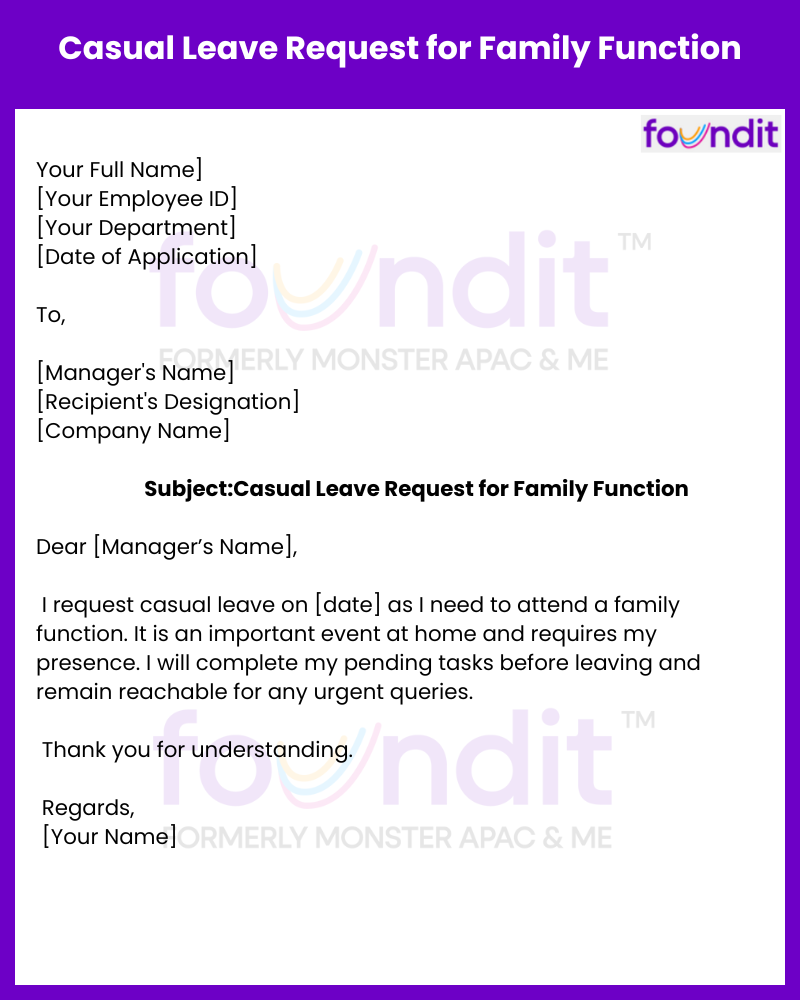
Sample 3: Casual Leave Application for Family Funtion
When writing a sample casual leave application for family function, follow this format.
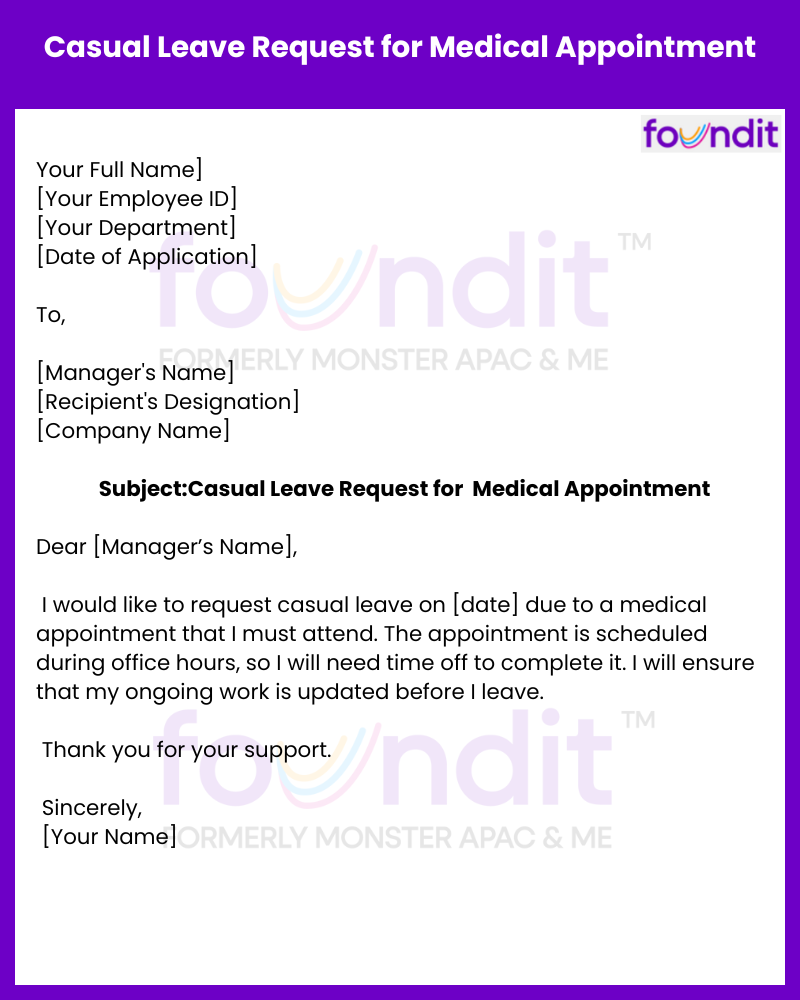
Sample 4: Casual Leave Request for Medical Appointment
Effective Tips for Writing Casual Leave Application
Here are some simple and practical tips to help you write a clear and professional casual leave application for office:
- Keep your request short and easy to understand.
- Mention the exact date of your leave to avoid confusion.
- State the reason for casual leave in one or two lines without unnecessary details.
- Inform your manager as early as possible, especially for planned leave.
- Reassure that your pending work is completed or handed over to a colleague.
- Use a polite and respectful tone throughout the application.
- Include your contact details if you expect any urgent communication.
- Check your company’s leave policy before applying to ensure you have remaining casual leave days.
- Avoid last-minute requests unless it is a genuine emergency.
- End your application with a simple thank you to show professionalism.
You May Also Like:
| Forced to forgo an optional leave? | Leave Application for Marriage |
| Garden Leave vs Notice Period | Leave Application for Sister’s Marriage |
Conclusion
Writing an effective employee casual leave application form is vital to maintain professionalism and ensure the absentee has good working relations with their colleagues.
If there is an issue, use our instructions and example for powering your request paper regarding leave, irrespective of whether it is intended for personal or health matters or your important working obligations.
To reduce disruptions regarding the working schedule, timely submission of work done and regular communication with colleagues and superiors demonstrate that you are an excellent corporate player who respects people’s time.
Following your organisation’s policies and procedures when composing and submitting a casual leave application form.
Casual Leave Application FAQs
Q1. What is the Purpose of a Casual Leave Application?
A casual leave application formally requests time off from work for personal, medical, or urgent reasons. It helps maintain professionalism and ensures transparent communication with the employer.
Q2. What Should I Include in My Casual Leave Application?
Your casual leave application should include your details, the reason for the leave, leave duration, contact information, and any arrangements for managing your workload during your absence.
Q3. How Should I Address My Supervisor in the Casual Leave Application?
Begin your casual leave application with a formal salutation, such as “Dear [Recipient’s Name],” addressing your immediate supervisor or the relevant authority.
Q4. Is it Necessary to Provide Supporting Documentation for a Casual Leave Application?
Depending on your company’s policies and the nature of your leave, you may need to provide supporting documents. A medical certificate may be required for medical leaves, while personal leaves may not need extensive documentation.
Q5. What Tone Should I Maintain in My Casual Leave Application?
Your casual leave application should maintain a professional and formal tone throughout. Focus on providing factual explanations and avoid delving into personal details or emotions.
Related Articles: